
The Antarctic Sea-Ice Switch (ASIS) research programme aims to understand recent abrupt changes in sea ice and will improve models of future trends to forecast impacts on global climate, sea-level change, as well as the structure and function of ecosystems in the Ross Sea region Marine Protected Area.
Highlights of the past year include:
- Models: New model configurations and coupling of models to better represent sea ice dynamics and improve climate models.
- Methods: New methods for letting scientists test climate models directly against real-world physical archives, and for fast-tracking paleoclimate and paleoenvironmental reconstructions.
- Capability: Testing a new lightweight drill in Antarctica, and developing a prototype sea ice sensor buoy.
- Advice: Supporting policy impact partners through the contribution of data, advice and research syntheses for presentation at international Antarctic and Southern Ocean meetings.
- Team: Ongoing commitment from over 18 organisations across nine countries to deliver critical research through our NZ-led collaboration. Recruitment of new talent into our community with support for post-graduate students and early career researchers.
…More information is outlined below, and more website updates are coming soon!
Research & Science Advances
- A new model configuration for Antarctic sea ice evolution, called neXtSIM-Ant. The model improves the simulation of sea ice fracturing in comparison to previous models, and demonstrates improved skill at predicting where and how the ice will move and break apart, especially during short-duration breakup events caused by storms. This was published in a journal paper (Santana et al, 2025), and was written up as a case study for NeSI / REANNZ high-performance computing applications.
- Successful coupling of the CICE (Community Ice Code) sea ice model into regional climate frameworks P-SKRIPS (Polar Scripps Coupled Ocean–Atmosphere Regional Ice Prediction System) to improve Antarctic simulation accuracy. This is a major milestone for the project and an advance in high-resolution sea ice modelling capability in the Ross Sea. This was written up as a case study for REANNZ.
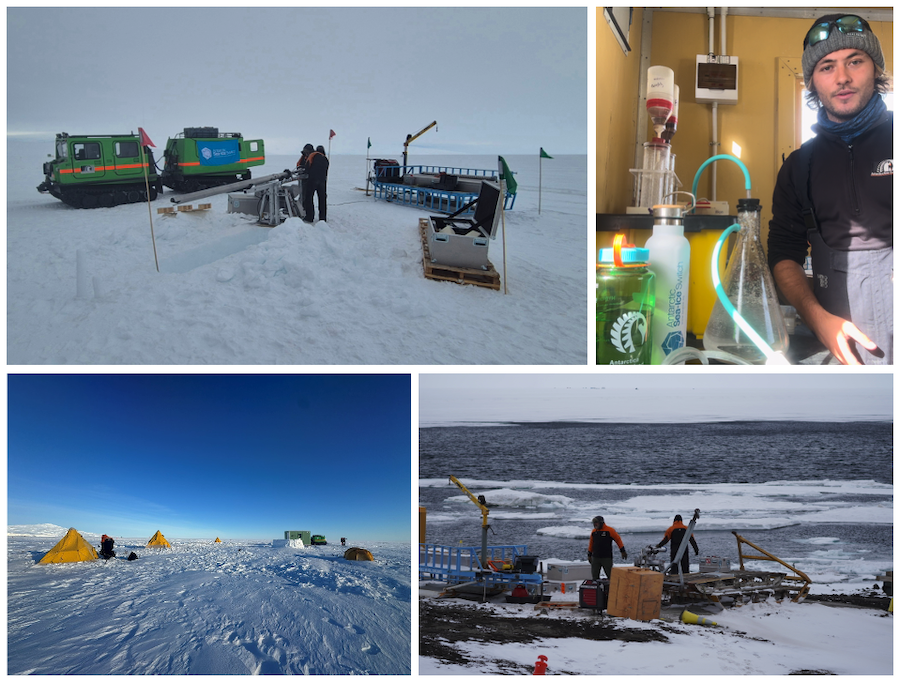
- Successful testing of the lightweight ice core drill in Antarctica (summarised in this web update). This included assembly and basic mechanical and electrical testing, as well as a mock field site test. The team are now ready for future deployment to Whitehall Glacier to achieve the drilling target of>250 m of core.
- A successful near-shore phytoplankton sampling programme in Antarctica (summarised in this web update). The combination of field sampling and lab-based analysis aims to improve understanding of how Antarctic phytoplankton communities respond to changing sea-ice and water-column conditions as an indicator of ecosystem health for the Ross Sea region, including the Marine Protected Area.
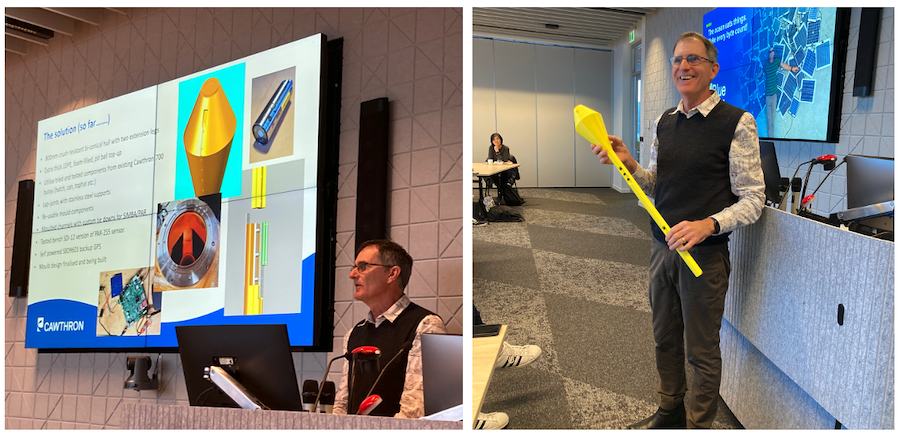
- The first custom-made sea ice sensor buoy prototype for deployment in the open ocean with seasonal sea ice(in collaboration with the Antarctic Science Platform). The prototype is planned for deployment in summer 26/27 to observe for the first time critical processes during the full cycle of pack ice growth and decay. Intellectual Property and capabilities to underpin design and construction comes from new collaborators: Cawthron Institute (NZ) and the Scottish Association for Marine Science.
- A new machine learning method that automatically scans, segments, and quantifies fossil diatom slides. This pipeline bypasses slow manual counting, enabling high-resolution paleoclimate and paleoenvironmental reconstructions at unprecedented temporal scales, while unlocking the immense scientific value of existing sample collections that have remained largely inaccessible for comprehensive analysis.
- The new isotope-enabled HadCM3model is now fully operational. This model tracks stable water isotopes through the Earth's hydrological cycle, allowing us to test climate models directly against real-world physical archives, such as ice cores. Also, present-day and future projections of climatological conditions (under a 2×CO₂ scenario) for the Ross Sea sector have been completed with interesting results.
- International collaboration has provided access to Ross Sea region ice cores and marine sedimentary cores, and their data. The team is working to design a method that could support the development of a gridded product to extent the observational record of sea ice conditions from decades to centuries.
- Collaboration with international colleagues is developing an international ice core repository that compiles new, unpublished, and existing ice core records that capture sea ice conditions in the Ross Sea region. This will support a region-wide reconstruction of sea ice conditions.
- A new collaboration with international colleagues at the Danish Meteorological Institute provided access to new satellite-based information on sea-surface irradiance and albedo in the Southern Ocean for updating and revising the satellite-based index of sea ice algae primary production.
- An additional Argo float, provided by our Canadian collaborators (total of 3 since the initiation of ASIS), was deployed in 25/26 field season by our Italian collaborators on the RV Laura Bassi, adding to the global Argo network.
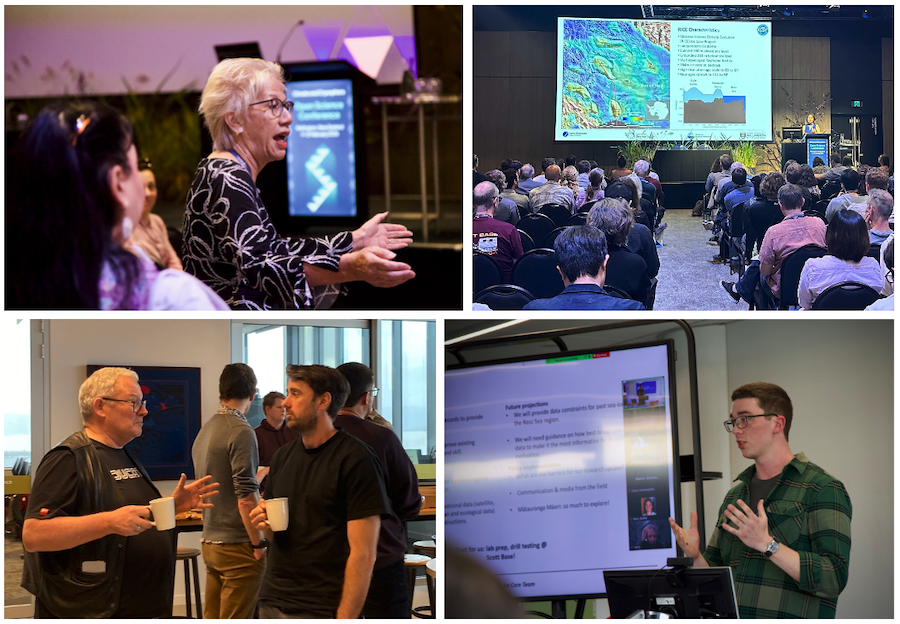
- Important research findings were shared at distinguished international conferences. This included, eight oral and poster presentations at the international Climate and Cryosphere (CLiC) Open Science Conference in Wellington, New Zealand (February 2026).
- We supported a collaborative science communications campaign led by VUW on the 2024 RV Laura Bassi voyage to the Ross Sea.
Research Uptake & Science-Policy Engagement
Our impact partner advisory group is established, engaged and providing valuable input to inform programme activities, communications, future outputs and priorities. Key policy impact stakeholders participated in the 2025 ASIS Hui and 2026 ASIS Hui, and we have responded to requests for sea-ice data and information for both international and national policy uses.
During the past year, examples of collaboration with impact partners and research users includes:
- Data and research contribution(ongoing) to the NZ evidence is being assembled for the 10-year Ross Sea region MPA review. This is through directly working with project leaders from MPI/DOC, supporting Antarctica NZ’s data initiatives, as well as via researcher participation in NZ Antarctic Working Group meetings, contribution to policy papers, and involvement in the international Ross Sea Research Coordination Network working groups.
- ASIS social scientist Smrithi Talwar (ESNZ) joined the NZ delegation to the CCAMLR’s 44th annual session (Hobart, Australia, October 2025), accompanying representatives from MFAT, MPI, DOC, Antarctica NZ and others.
- ASIS team members (Cassandra Brooks, Sharon Stammerjohn and Nancy Bertler) contributed to a working paper that was developed by the Scientific Committee on Antarctic Research (SCAR)’s advisory group, the Standing Committee on the Antarctic Treaty System (SCATS)chaired by Cassandra Brooks) 'Evolution, Drivers and Implications of Antarctic Sea Ice Change’ and was submitted toATCM-48 and CEP-28. Some of the information was also shared at the SC-CAMLR)climate change workshop.
- Development of new international initiatives that build on ASIS in preparation for New Zealand scientific leadership in Antarctica InSync and the 5th Polar Year (IPY5),including the creation of a SCAR Action Group for Wilkes Subglacial Basin with partners from 11 nations (co-chaired by Matt King, University of Tasmania, Nancy Bertler, ASIS PI, and Laura De Santis, ASIS Researcher, OGS, Italy).
- ASIS team member Denise Fernandez contributed to / co-authored the SOOS (Southern Ocean Observing System) 2026-2030 Science and Implementation Plan (which is in final draft stage before submission).
- ASIS team member Sandy Morrison serves as Coordinating Lead Author for the Intergovernmental Panel on Climate Change (IPCC) Assessment Report 7 WG1. Project meetings discussed IPCC priorities and knowledge gaps for AR7. Some ASIS team members are registered to serve as reviewers of the AR7 draft.
Team
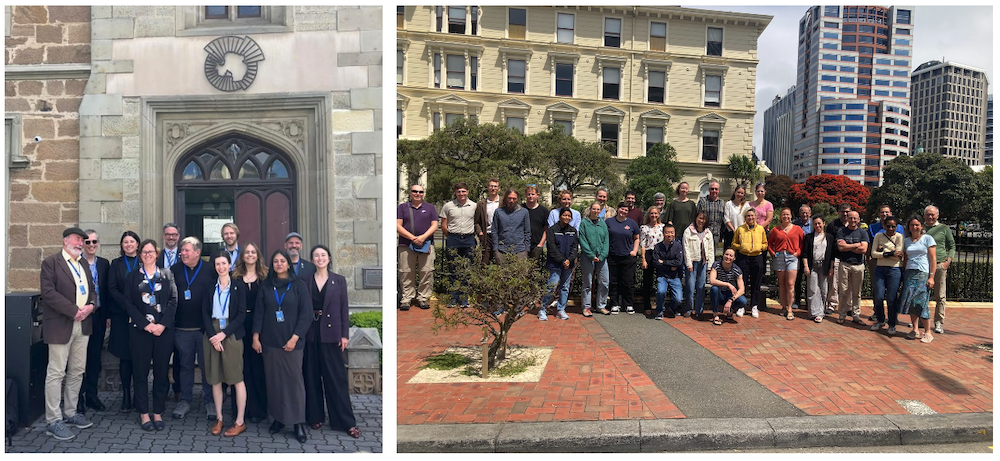
We have ongoing commitment from over 18 organisations across nine countries (including NZ) to deliver critical research. These collaborations are critical for access to published and unpublished data, unique analytical capabilities, fieldwork logistics and equipment.
In the past year team updates include:
- The research team has grown with the appointment of Postdoctoral Fellows Dr Rachel Diamond at partnering organisation the British Antarctic Survey, and Dr Nathan Rew, at the University of Waikato. The ASIS programme currently proudly supports seven early career researchers.
- We welcomed marine scientist Dr Paul Barter (Cawthron Institute), a specialist in the development of autonomous marine monitoring systems and oceanographic instrumentation.
- Where we lost staff(researchers, technicians) to other opportunities, and we are excited to have recruited new talent into our whanau. We welcomed numerical modeller and coastal scientist Rafael Santana (ESNZ/VUW), replacing Stefan Jendersie (VUW), and Nimmi Thambachan (ESNZ), replaced departing ice core technician, Rebecca Pyne (ESNZ).
- Excitingly, our graduate student cohort is evolving. We support two PhD students (Aimee Kaio, Milan Cunliffe-Post) and one masters student (Magnolia Lowe). The addition of post-graduate students has also welcomed new research co-supervisors into the ASIS whanau (Rebecca Preistley, Leigh Tait, Charlie Lee, Luke Fitzmaurice-Brown). Additional PhD student projects are being scoped and will soon be advertised.