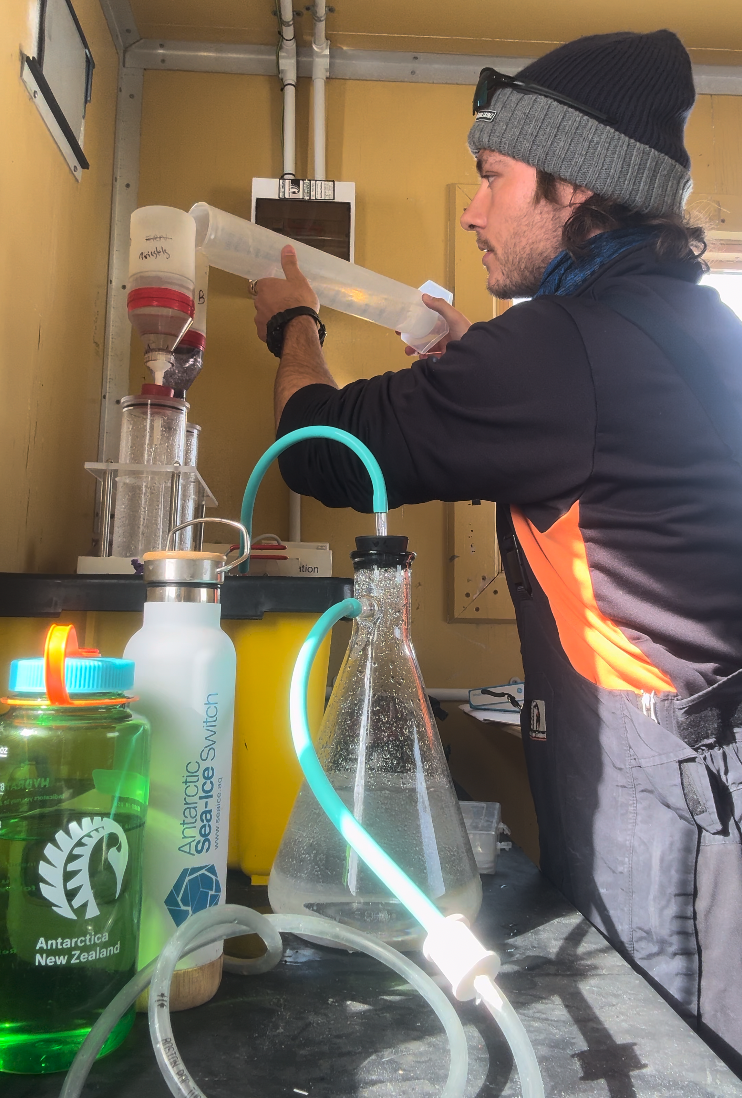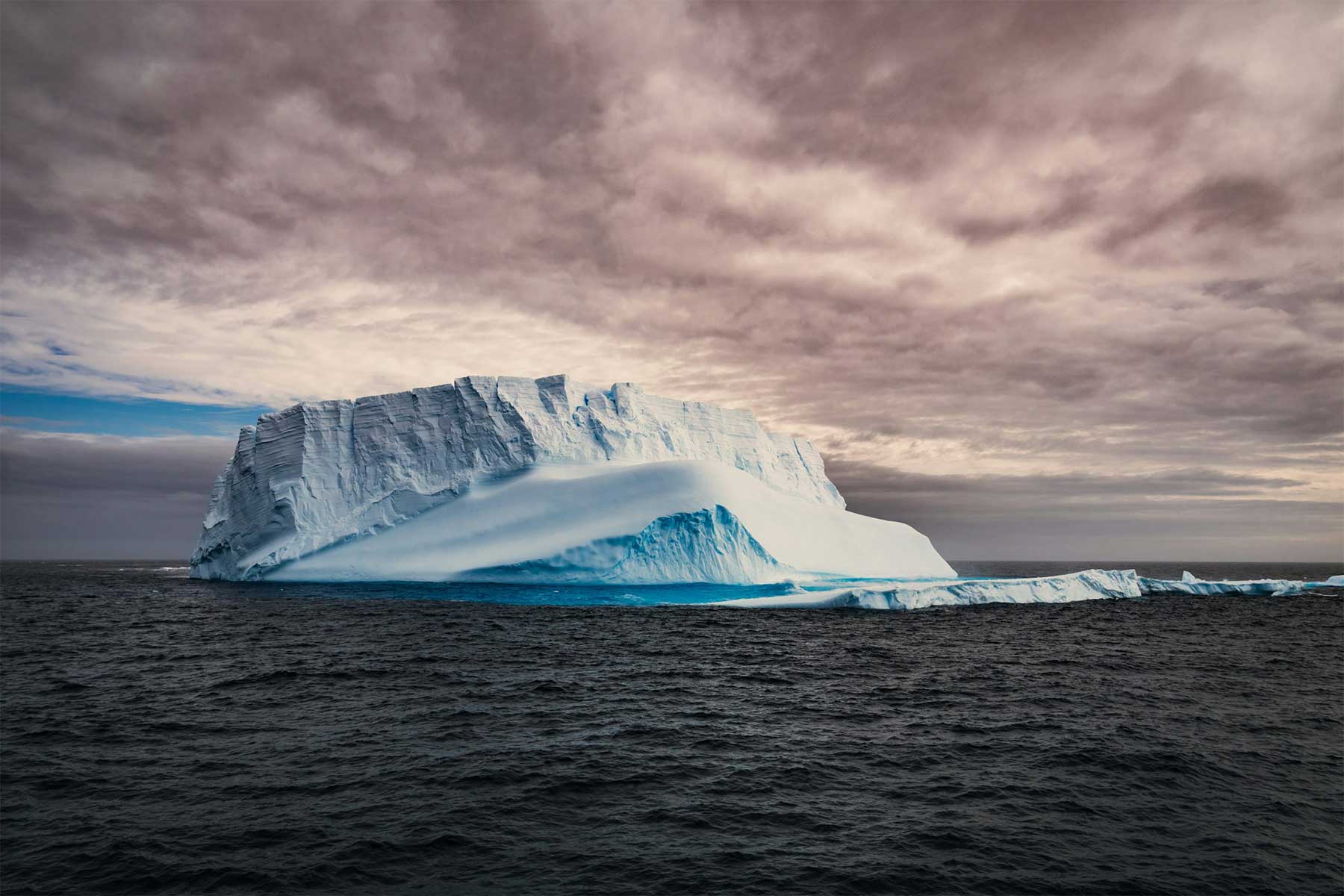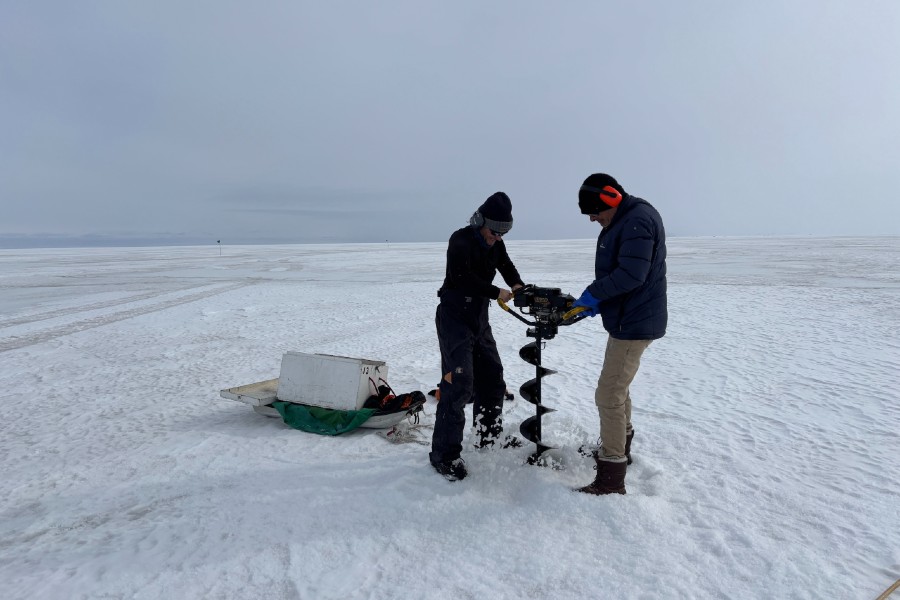

In the 25/26 Antarctic field season, researchers undertook a shore-based sampling programme to determine what phytoplankton information could be obtained to validate satellite data records.
Phytoplankton form the base of Antarctic marine food webs and play a vital role in carbon cycling. However, it is not clear how phytoplankton communities will respond to changing sea-ice conditions.
Sea-ice conditions strongly influence Antarctic phytoplankton blooms. Sea ice affects light availability, water-column structure, nutrient supply, and the timing of seasonal productivity, all of which can influence when blooms occur, how large they become, and which phytoplankton species are present. The flow on effects of this influence can be wide ranging and span across multiple trophic levels having large ecological impact.
Monitoring phytoplankton
A significant challenge is that Antarctic phytoplankton communities are difficult to observe consistently. Fieldwork is limited by weather, sea-ice conditions, logistics, and short seasonal windows.
Satellites are useful because they allow us to monitor much larger areas over time and year round. For example, the NASA PACE satellite mission has hyperspectral sensing capabilities, and this is enabling new monitoring methods. The high-resolution data acts like a chemical fingerprint, allowing scientists to identify specific types of pigments and distinguish between different phytoplankton groups and species. In Antarctic water this could be particularly useful for the monitoring of important groups, such as diatoms and haptophytes.
But satellite data stills needs high-quality in-situ measurements to help interpret what the signal from space is actually showing. This is where field-work comes in—to collect data to validate the satellite information.
The shore-based sampling programme
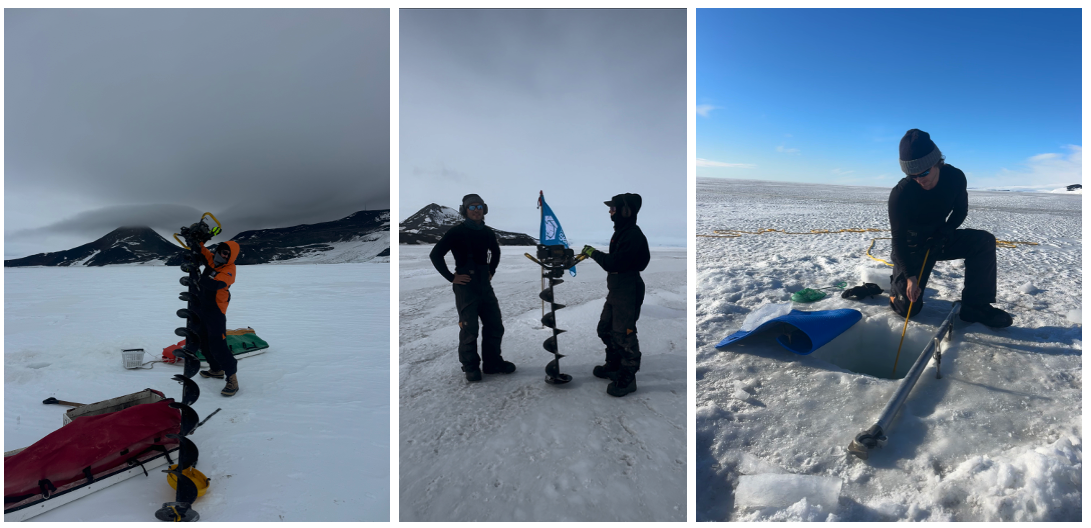
In the late 2025, PhD Student Milan Cunliffe-Post and Prof Ian Hawes from Waikato University undertook a near-shore phytoplankton sampling programme. A combination of field sampling and lab-based analysis aims to improve understanding of how Antarctic phytoplankton communities respond to changing sea-ice and water-column conditions.
The fieldwork was conducted at two sites situated close to Ross Island: Arrival Heights and Pram Point. These locations were chosen because they are influenced by water from the Ross Sea Polynya, an area associated with phytoplankton bloom development. By sampling at these sites, researchers aimed to capture signals from bloom events as water moved into McMurdo Sound and around Ross Island.
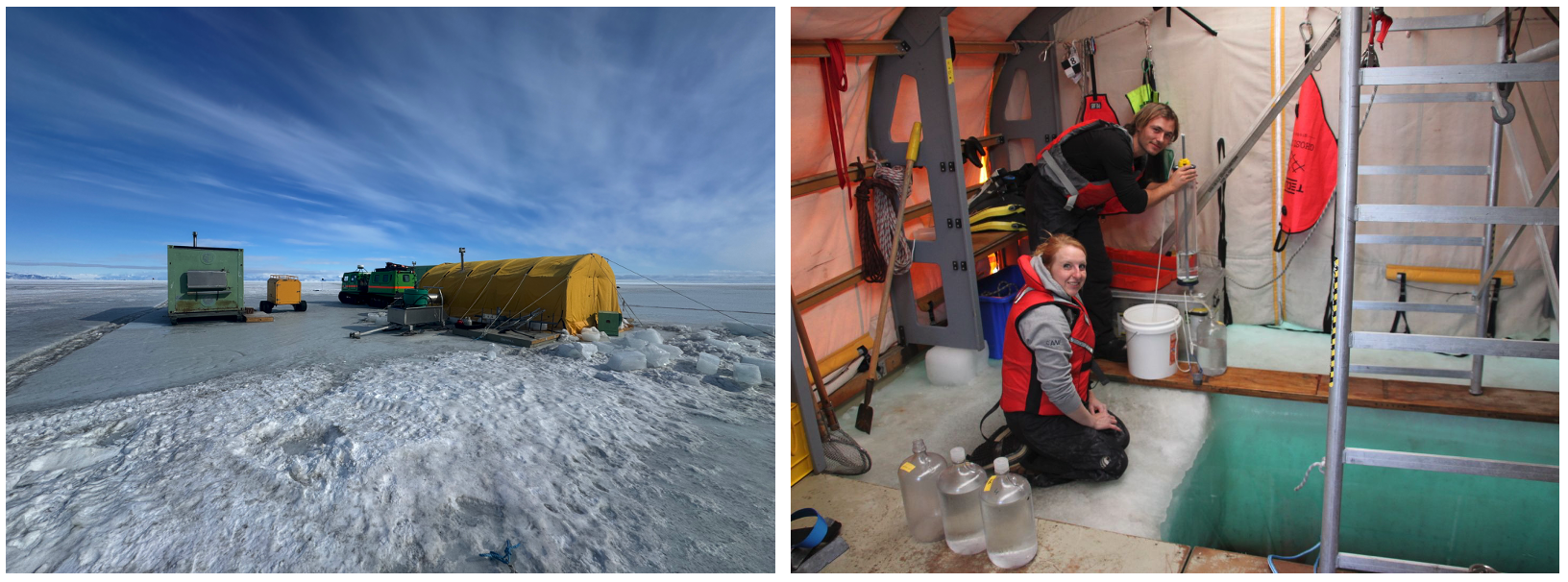
Water was collected from different depths to understand how phytoplankton changed through the water column. Some samples were filtered using microglass filters for later chlorophyll-a and pigment analysis, which helps indicate phytoplankton biomass and the types of phytoplankton present. Other samples were preserved and will be used for later laboratory analysis, including measurements of phytoplankton biomass, pigments, and community composition. This analysis will help connect local bloom dynamics and species composition to the environmental conditions shaped by sea ice.
At each site, a CTD and AquaTroll was deployed to measure the surrounding water conditions, including temperature, salinity, depth, and fluorescence. These measurements were taken at the same time as the water samples so that the phytoplankton results could be linked to the environmental conditions present during sampling.
A key goal was to establish a permanent phytoplankton sampling station off Pram Point. While this was not fully realised due to a couple mechanical complications, the season was still highly valuable. It provided a strong first experience of working in Antarctica, including learning how to operate in a challenging field environment, problem-solve under pressure, and adapt sampling plans as conditions changed.