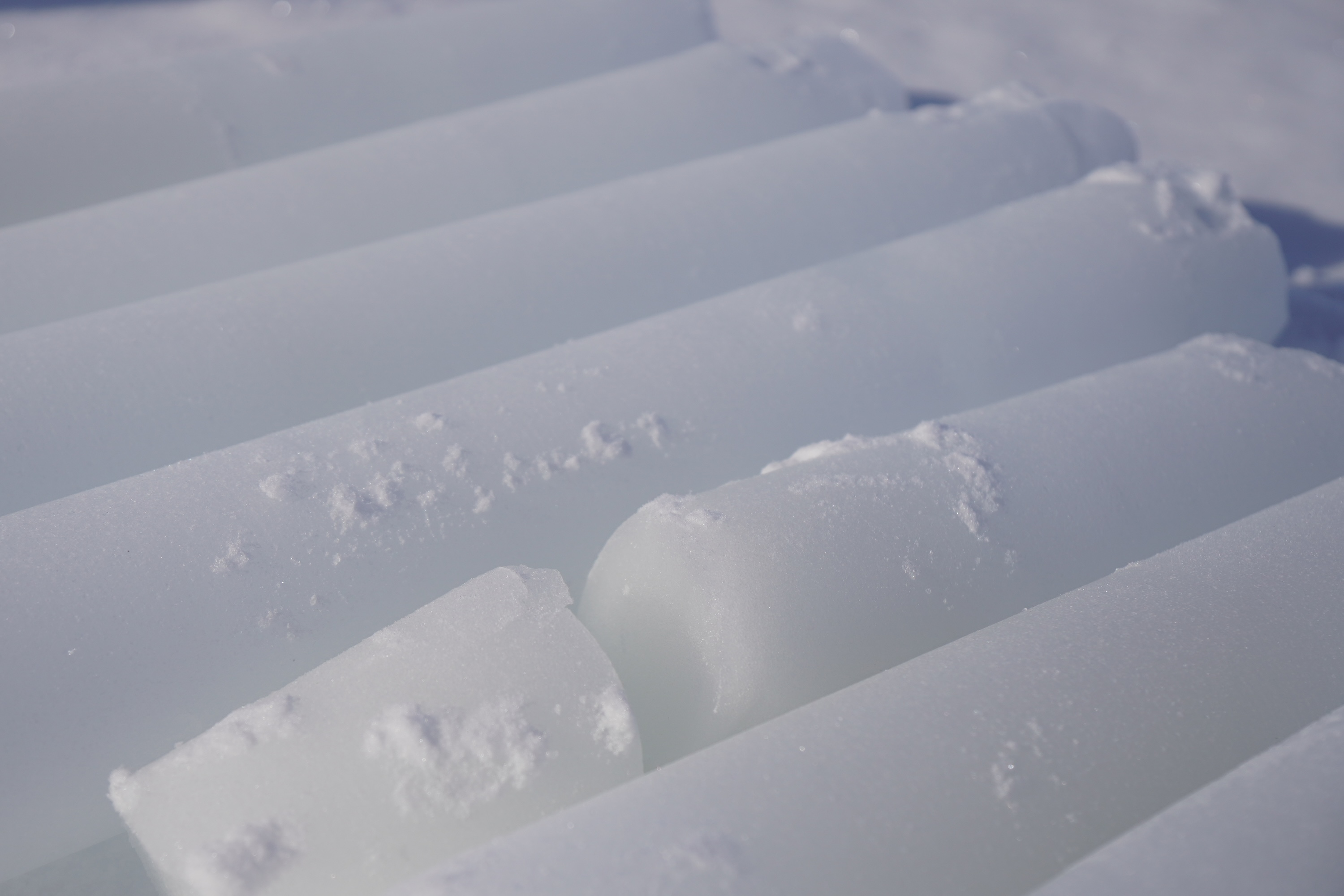

The ASIS ice core team is exploring ways to combine the ice-core records from the Ross Sea to build a more comprehensive picture of past sea-ice conditions.
In the last decade, Antarctic sea-ice has undergone a change in variability unprecedented in at least the last century. Sea ice is a critical component of the Earth system, influencing many processes, including global albedo (how much solar energy the Earth reflects back into space), dense-water formation (which drives the global ocean circulation), ocean salinity and temperature, ocean ecosystems and ice-shelf stability.
Understanding why Antarctic sea ice is changing, whether recent declines are likely to persist, and what these changes mean for the wider environment and communities at lower latitudes is an urgent scientific priority. As part of this effort, the “paleo” component of the Antarctic Sea-Ice Switch programme, focused on establishing past baselines in sea ice, is being addressed by both our marine sediment- and ice-core teams.
Ice cores are archives of past environmental conditions
“Paleo” (as a prefix) refers to the ancient climates and environments that existed before human record-keeping. Because direct weather measurements are unavailable, scientists rely on natural records as proxies to learn about past environments.
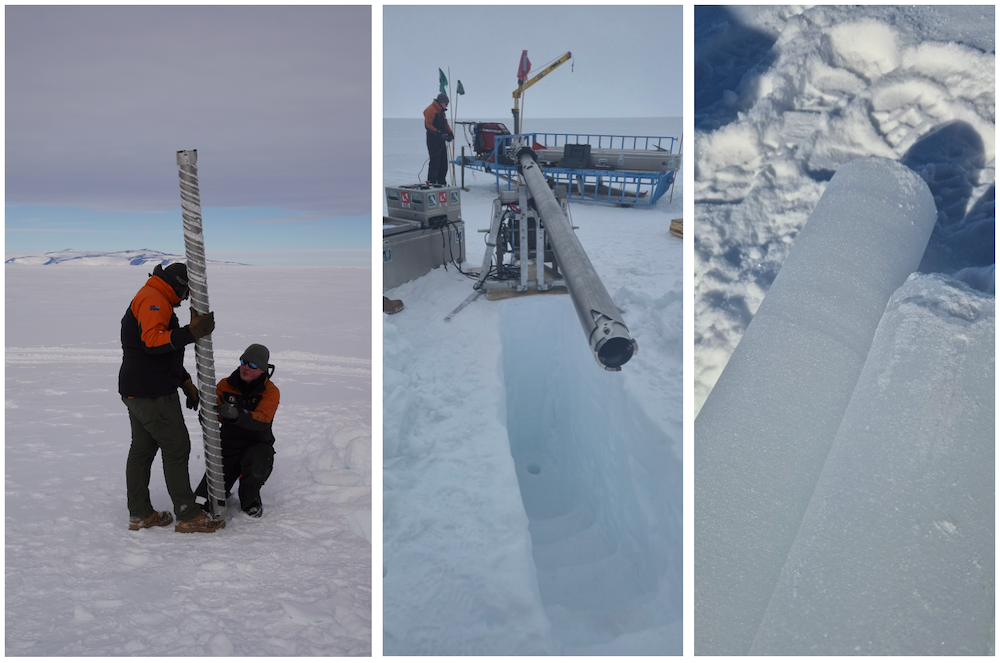
Ice cores are particularly valuable records because they can preserve environmental information at exceptionally high resolution. At sites with high snowfall rates, ice cores can contain sub-seasonal records spanning many centuries. Observations of the upper part of an ice core, called firn — a dense, compacted layer of granular snow older than one year that represents the transitional stage between loose surface snow and solid glacial ice — overlaps with the satellite data, providing an opportunity to directly calibrate ice-core proxies against observed environmental conditions, such as satellite records of sea-ice cover.
There is a sea-ice data gap since 2016
The unprecedented nature of the recent sea-ice decline in Antarctica presents a challenge. Existing calibrations of sea-ice proxies are largely based on ice cores collected before 2016 and may not adequately capture the isotopic and chemical signals associated with such a dramatic and unusual change. To understand the recent sea-ice decline in its longer-term context, new cores containing material from the most recent decade are needed. These records will allow the team to identify the chemical and isotopic “fingerprint” of recent sea-ice change and trace that signal back through the preceding centuries.
Thus, a key deliverable for our ice core team is a new ice-core record from the Western Ross Sea that captures the dramatic changes in sea ice observed since 2016.
Matt Harris, Paleoclimate and Ice Core Scientist at Earth Sciences NZ, explains that “there are lots of ice cores collected from around the Ross Sea, but none of them cover the recent sea ice decrease. Next year we aim to collect a new ice core that does this. Then we're working alongside some very talented modellers to try and better understand what the underpinning drivers of that variability are.”
You can read more about successful testing of our light-weight, ice core drilling system in Antarctica in January 2026.
Past climate reconstruction
Our ice-core team, bringing together researchers from New Zealand, Korea, UK and Italy, is collecting new ice cores and combining them with existing international records to develop a network-based reconstruction of Ross Sea sea-ice variability extending several centuries into the past.
Sea ice behaves differently across different regions of Antarctica, so it’s important to consider these variations carefully when reconstructing past sea-ice conditions. One way of looking at these changes is through the total Antarctic sea-ice anomaly. An anomaly simply describes the difference between what we would normally expect for a particular time of year (derived from a long-term average) and what is actually being observed in a given year.
In the Ross Sea region, we see much greater sea-ice variability following the large decrease observed in 2016, with strong differences between the eastern and western Ross Seas. Some of the subsequent annual declines appear to have reached levels similar to those recorded in 1980. This is the kind of variability the ice-core team is interested in reconstructing. Their aim is to determine whether the recent decline falls within the range of natural variability, or whether other factors may be contributing to the changes we are seeing.
The ice core team is exploring ways to combine the ice-core records from the Ross Sea to build a more comprehensive picture of past sea-ice conditions. This includes “stacking” multiple cores and combining different proxy measurements within individual cores, many of which can provide information about sea ice in different ways.
Matt Harris shares that “we have lots of records in the Western Ross Sea now, in particular. So, we're exploring core stacking — combining cores and stacking multiple proxies within cores — because at some of these sites we have many different things we've measured, all of which have different relationships to sea-ice. For our next step, we need to know what products in terms of reconstruction we could produce that would be most useful for the other teams.”
While the aim is to retain spatial detail across the wider Ross Sea region, producing a comprehensive or gridded reconstruction that can be used directly by modelling teams will be challenging. With an increasing number of records, particularly from the western Ross Sea, the team sees an opportunity to make better use of these datasets by combining the available evidence rather than treating each core as an entirely separate record.
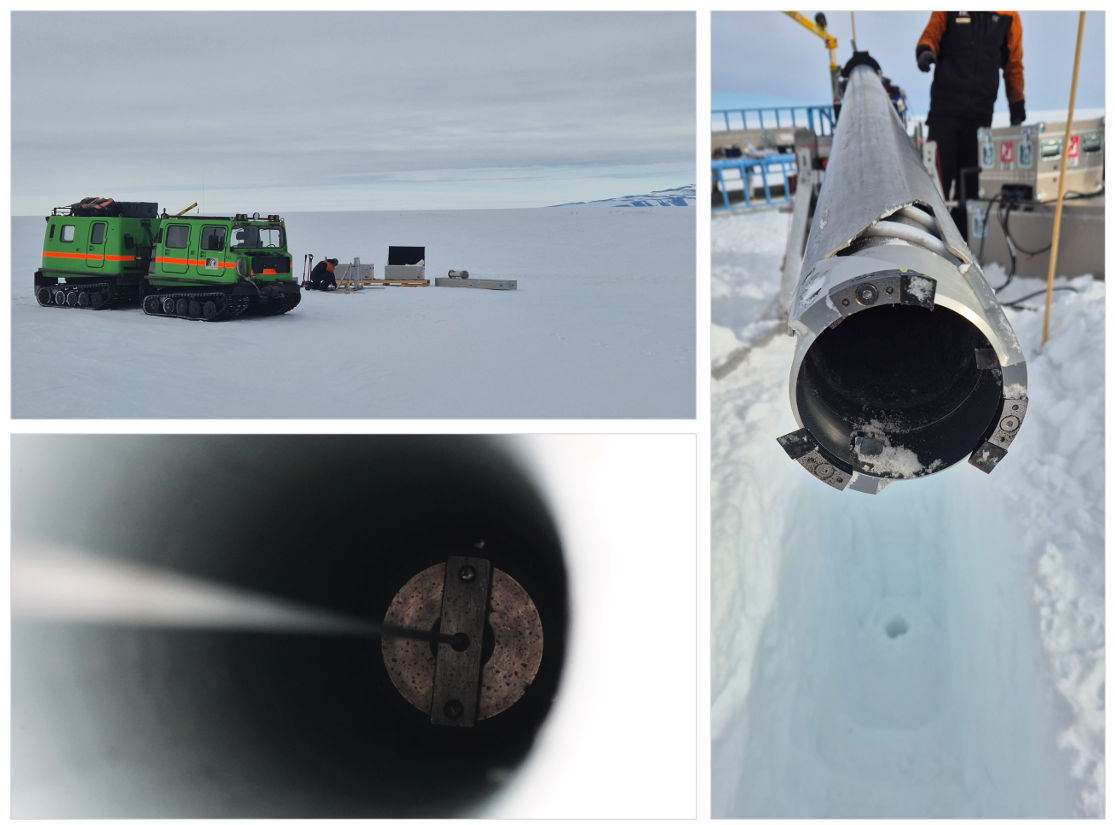
With thanks to the Ice Core Research Team: Matt Harris, Nancy Bertler, Darcy Mandeno and James McPhail - for their contributions.