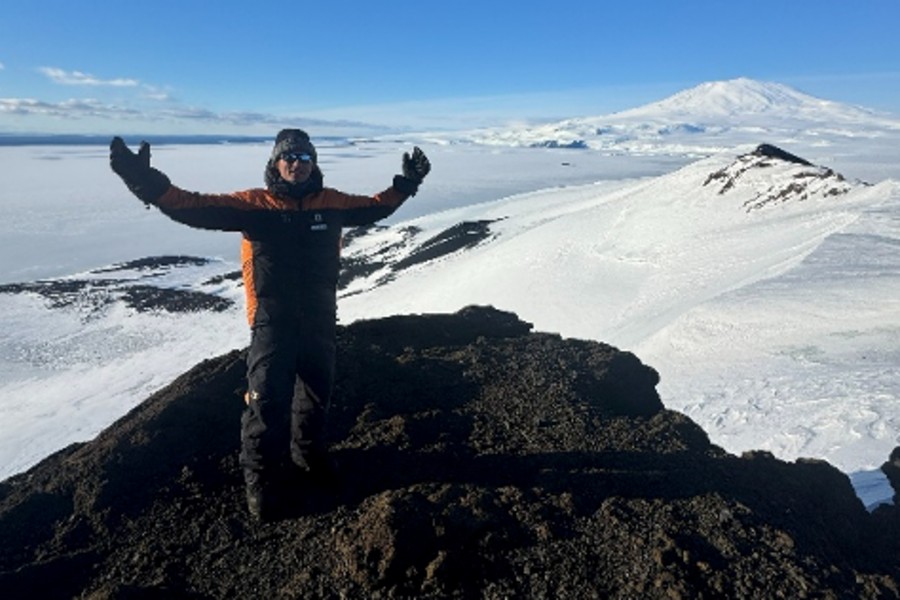

We welcome new PhD student, Milan Cunliffe-Post to the Antarctic Sea-Ice Switch team. His research, through Waikato University, aims to explore how changing sea ice affects Antarctic marine ecosystems.
Below, Milan shares a few things about himself and his research.
Where do you come from?
I’m very much a product of my family. My parents, Rebecca and Jade, and my three little sisters Onyx, India, and Harlow have had a massive influence on who I am, and who I aspire to be as a person. I grew up in Tāhunanui in the Whakatū/Nelson area and later moved to Te Waiharakeke/ Blenheim. I spent four years down in Ōtepoti/Otago studying, three years working in Pōneke/Wellington and now am based up in Tauranga!
In your spare time where would we find you?
Surprise surprise, I like to spend a lot of time in the ocean, whether it’s surfing, diving or just going for a swim, I’m usually in the water at least once a day. Outside of this I like to listen to a lot of music, heading out to gigs or just jamming an album while I’m cooking or relaxing, a day with music is a heck of a lot better than a day without! Travelling when I can, reading, camping, hiking, skimming stones, playing sports, having a laugh with family and friends – that’s generally what I’m about.
What are 3 things on your bucket list?
- Diving in Antarctica (hopefully can make this happen within the next wee-while!)
- I’d love to be involved with some type of film/documentary work in the future, blending science with journalism/science communication has been a pretty big dream of mine since I was a little kid. I think visual communication and storytelling offers a unique way to help people learn about the natural world and want to protect it.
- Become as good at cooking as my parents (tall task)
What’s your involvement in the ‘Antarctic Sea-Ice Switch’ programme?
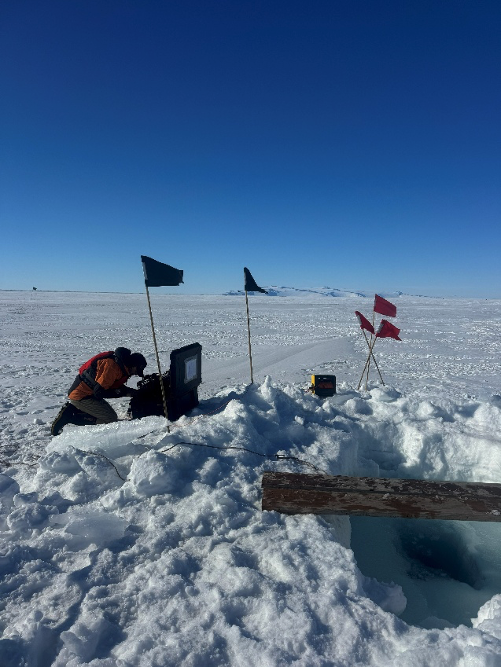
My PhD focuses on how changing sea-ice conditions may affect phytoplankton communities. Phytoplankton form the base of Antarctic marine food webs and play a vital role in carbon cycling. However, there is still a bunch to learn about how phytoplankton communities will respond to changing sea-ice conditions and how we can gain a better understanding of their dynamics through new technological advances. Through my research, I hope to better understand how sea-ice variability influences phytoplankton bloom dynamics, species composition, and vertical structure in the Ross Sea region.
What inspired you to undertake this study?
Growing up I spent a lot of time in and around the ocean, it naturally became my happy place. Going back a long way my grandfathers had all been fisherman, I spent a lot of time listening to their stories of the seas it piqued my interest pretty early on. Further back to other ancestors, such as Captain James Heberly and Aperahama Manukonga, Rangatira of Te Ati Awa – I’d always felt like I had a bit of saltwater in my blood. I also felt like I owed the ocean a lot and wanted to learn about it and protect it as best as I could.
Because of this, I decided to study marine science down in Otago and this led to a bit of a revelation of just how intricate marine ecosystems are. My brain sort of thinks of them as a bit of an abstract pattern full of wiggles and swirls that you get to try and piece together and attempt to figure out.
Post-university I worked for Fisheries New Zealand and was most heavily involved in the Antarctic sector. My curiosity level went a little off the charts, it’s such a fascinating place and the more I learnt about it, the more it pulled me in. Primarily my marine science interests have somewhat always existed at an intersection between physics, biology and ecology. This has always made primary production, the base layer of energy that helps sustain an ecosystem and all the trophic layers above it, my main muse.
Aside from being a crazy cool place to get to go, Antarctica offers a lot of unique challenges in investigating primary production in a changing environment, I’m just stoked to get the chance to learn more about it.
What are you most excited about for this research?
Aside from getting to fulfil a bit of a lifelong dream to become an Antarctic scientist, I think I’m most excited to learn a lot of new skills. My father is a builder and because of this I think I view my PhD is somewhat like an apprenticeship. I look at it as on opportunity to learn how to use a lot of different tools and problem solve using the suite of skills I learn accordingly. Tools that I’m pretty psyched to try and learn are largely based around remote sensing technologies, PACE, ROVs, drones, I think the technology we have available today offers a lot to gain for environmental monitoring and I hope the research I conduct can have impact through forums like CCAMLR.
Read more about Milan’s recent Antarctic fieldwork here.