
A recent scientific review highlights how Antarctica's Wilkes Subglacial Basin is vulnerable to environmental change. A new SCAR Action Group has been established to coordinate international efforts to learn more.
Members of our team co-authored a recent journal paper that represents a significant international effort, bringing together 28 researchers from 14 countries. The authors synthesised the current knowledge of the Wilkes Subglacial Basin and, importantly, identified the critical uncertainties that remain.
King, M.A., Bertler, N.A.N., Anandakrishnan, S. et al. (2026). Dynamic instability of the Wilkes Subglacial Basin Ice Sheet, East Antarctica. Nature Reviews Earth & Environment.
You can also find a linked article summarising this research in The Conversation: Tragedy stopped Mawson exploring this remote Antarctic region. We must get there tostudy its melting ice.
Why does this matter?
Professor Nancy Bertler, states that “the Wilkes Subglacial Basin contains enough ice to contribute an estimated 3-4 metres of global sea-level rise if lost. Changes in this region could also affect key components of the Earth system, including global ocean circulation, heat transport, and carbon uptake.”
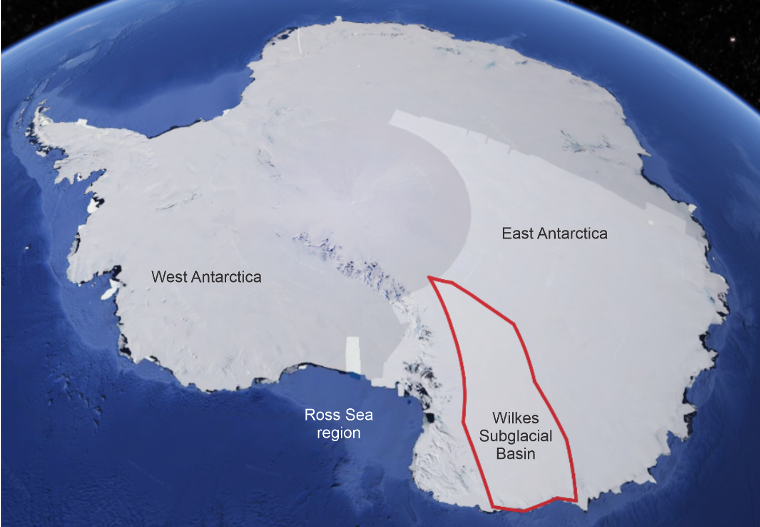
This basin is approximately 1400 km long and 400 km wide, and is buried beneath an Antarctic ice sheet that is over 3 kilometres thick. Much of the bedrock in this area is sitting 1 to 2 kilometres below sea level—this makes its ice sheet potentially vulnerable to unstable retreat, which could lead to rapidly increasing sea levels as well as meltwater production.
Nancy notes that “reconstructions of the past show that thisbasin’s ice sheet shrank dramatically when the climate was 2–3°C warmer”. Shesays “ these are environmental conditions we are rapidly approaching”.
Despite its scale and importance for future sea-level rise, the Wilkes Subglacial Basin remains one of the least observed regions of Antarctica. Addressing the fundamental questions that remain unresolved will require more than individual research programmes: it demands a coordinated, sustained international effort that aligns national investments, infrastructure, observations, and expertise around a common scientific agenda.
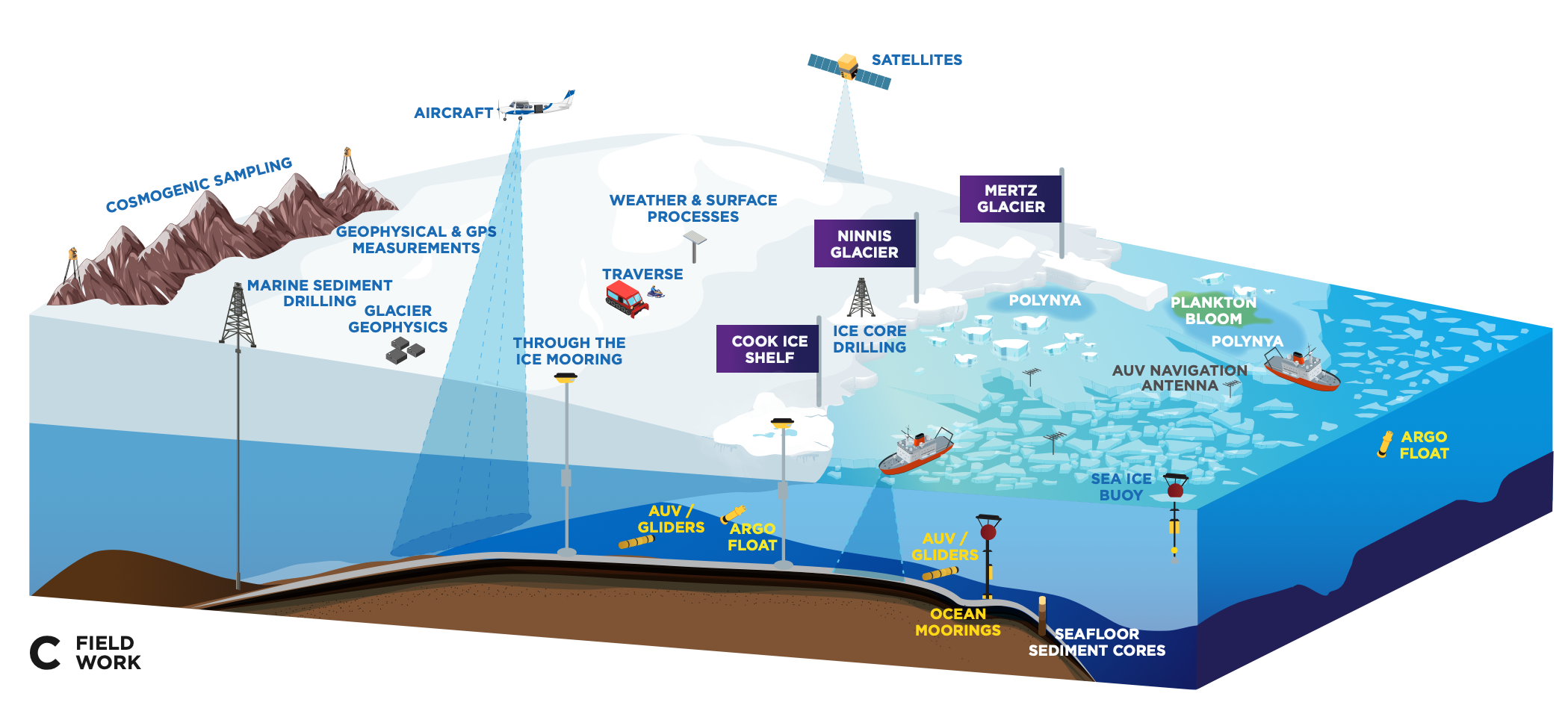
Assessing current and future vulnerabilities will require a multinational, interdisciplinary collaboration. In response, Matt King, Laura De Santis, and Nancy Bertler have secured approval from the Scientific Committee on Antarctic Research (SCAR) to establish a Wilkes Subglacial Basin SCAR Action Group. The new group will bring together researchers from around the world to coordinate observations, modelling, and future research priorities for this critical region.
You can sign up to the SCAR Action Group here.